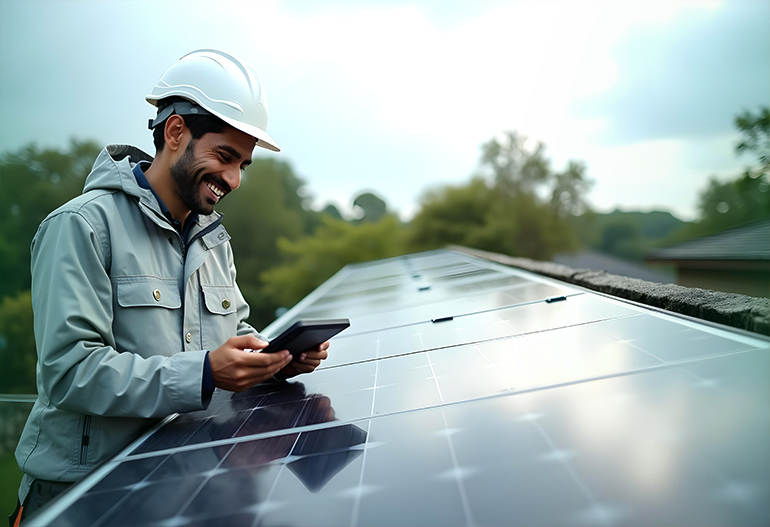
Can Solar Panels Still Perform on Cloudy Days? Absolutely.
It’s a common myth that solar panels don’t work on cloudy days. While it's true that solar energy production drops when the sun isn't shining brightly, solar panels can still generate power even when it's overcast.
Let’s explore how — and why — cloudy weather isn’t the end of your solar savings.
1. Solar Panels Work with Sunlight, Not Just Direct Sun
Solar panels generate electricity using photons, which are light particles. Even on a cloudy day, sunlight penetrates through the clouds — just not as strongly as on clear, sunny days. This diffused light is enough to keep your solar panels working.
On average, solar panels can still produce 10% to 25% of their normal output during overcast conditions — and sometimes even more, depending on the cloud cover and panel quality.
2. Modern Panels Are Designed for Low-Light Conditions
At Sherin Enterprises, we provide high-efficiency solar panels that are built to perform even in low-light conditions. Advances in technology mean that today’s panels are:
More sensitive to scattered and diffused sunlight
Designed with anti-reflective coatings for better absorption
Efficient even during early mornings and late afternoons
This means you’ll continue to see benefits from your solar system throughout the day — regardless of the weather.
3. Cloudy Days = Cooler Temperatures = Better Efficiency
Interestingly, solar panels tend to be more efficient in cooler temperatures. On very hot, sunny days, excessive heat can slightly reduce efficiency. Cloudy weather, with its cooler conditions, can actually help maintain stable panel performance.
So while total output may dip, the efficiency of power conversion can sometimes improve.
So, can solar panels still perform on cloudy days?
Absolutely.
With the right equipment, expert installation, and smart system design, you can enjoy clean, renewable energy all year round — rain or shine.